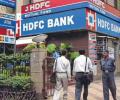
The merged entity's deposits grew by 16.2 per cent YoY at Rs 20.63 trillion at the end of the first quarter. Sequentially, the merged entity's advances rose by about 0.7 per cent to Rs 22.30 trillion as of March 31, 2023. However, the pace of deposit mobilisation was higher at 1.2 per cent over Rs 20.39 trillion as of March 31, 2023.

To provide more choices to customers, the Reserve Bank of India has suggested mandating bank and non-bank card issuers to issue debt, credit and prepaid cards on more than one network. Customers can choose any one either at the time of issue of the card or anytime later, according to draft norms released by the Reserve Bank of India on Wednesday. The RBI said card issuers would also be barred from signing agreements that limit their ability to tie-up with other card-networks, according to the draft.

Reflecting strong momentum in business, commercial banks, including one public sector lender, reported a year-on-year (YoY) growth in advances. This was higher than or around the banking sector trend in the first quarter ended June 2023. Bank of Maharashtra said its loans expanded by 25 per cent YoY to Rs 1.75 trillion. This pace was much higher than the banking system's 15.4 per cent growth till June 16, 2023, according to Reserve Bank of India (RBI) data.

The pace of lending to the infrastructure sector, including power and roads, fell sharply to 1.8 per cent year-on-year (YoY) in May, 2023 compared to 9.8 per cent in May, 2022. Within the segment, the growth in loans to the power sector was at 0.3 per cent YoY in May 2023, down from 9.3 per cent in May 2022. The RBI data showed that outstanding credit to power sector stood at Rs 6.17 trillion in May.

UCO Bank, Bank of Maharashtra, Bank of India, Indian Overseas Bank, Indian Bank, and Central Bank of India don't have a non-executive chairman.

'India has formed tremendous resilience and still a strong growth.'

'...because it is still a legal tender.'

Private sector banks reported the maximum number of frauds in 2022-2023.

Bank of Baroda (BoB) has made prudential provision of Rs 500 crore for exposure to Go First, which has sought bankruptcy protection after the National Company Law Tribunal (NCLT) admitted its plea for voluntary insolvency. Sanjiv Chadha, managing director and chief executive officer of BoB, said the bank identifies issues in advance and makes provisions if required. The Mumbai-based public sector lender has an exposure of Rs 1,300 crore to the troubled airline.

Private sector banks reported a robust profile with healthy growth in net interest income (NII), credit offtake and reduction in provision burden for the fourth quarter ended March 2023 (Q4 of FY23). However, as a pack, their net profit declined by 9.7 per cent year-on-year (YoY) at Rs 25,317 crore in Q4. This is because Axis Bank posted losses due to its one-time hefty charge for the acquisition of Citibank India's consumer business.

One reason why volumes have not increased in the retail segment is that users are not aware of merchants who accept digital currency.

The price hikes during Covid were more because of supply chain and logistics disruptions caused by the pandemic and the Ukraine war rather than firms increasing prices because of higher pricing power, a report by State Bank of India (SBI) said. "It is thus incorrect to infer that concentration power dictated pricing capacity of firms, thus resulting in unyielding core inflation," the report authored by Soumya Kanti Ghosh, group chief economic adviser, SBI, said. A recent research article by former Reserve Bank of India (RBI) deputy governor Viral Acharya had observed that persistence of core inflation in India is due to purchasing power of top-five corporate houses.

After opening close to 1,500 branches in 2022-23, HDFC Bank, the country's largest private sector lender, will continue expanding its branch network at the same speed in the current financial year. The lender says branch expansion is crucial for deposit mobilisation. As of March 31, 2023, HDFC Bank had 7,821 branches, up from 6,342 a year ago.
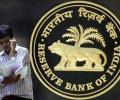
Higher for longer' may be the narrative in the developed markets, but interest rates might not stay high for very long in India, with a section of the market expecting rate cuts to begin this year. The six-member Monetary Policy Committee of Reserve Bank of India (RBI) decided to keep interest rates unchanged at 6.5 per cent in the April review - after hiking the policy repo rate in six previous meetings. RBI Governor Shaktikanta Das emphasised that the pause was only for the April policy and that the central bank was ready to act if the situation demanded.

SBI has suggested that banks be exempted from handing over the complete forensic audit report to the borrower as it would hamper future investigation and forewarn the borrower by way of disclosure of confidential information.
Benefitting from the economic rebound, banks are expected to report a healthy bottom-line and asset quality profile in the quarter ended March 2023 (Q4FY23). The net profit of listed commercial banks is projected to grow by an average 43.6 per cent year-on-year (YoY) in Q4FY23 amid better net interest margins (NIMs) and declining credit costs. This is based on a combined assessment of analyst estimates for 17 banks on Bloomberg database.

The share of low-cost money in total deposits continued to take a knock at the close of FY23 as banks engaged in intense competition by offering higher interest rates on term money to garner funds amid tight liquidity conditions. The share of current accounts and saving accounts (CASA) in total deposits declined by 2-4 per cent by end of March 2023 from March 2022 figure, according to BSE filings by private banks. The ease of movement of funds on digital platforms and the deployment of money by businesses from current accounts also played a role in dwindling the share of CASA money.

'Given that debt AIFs, by nature, target a higher portfolio return, it is likely to attract investors like HNIs, family offices, etc, looking for a higher yield debt product.'

The Supreme Court's decision to allow borrowers a chance to be heard before their accounts are flagged as fraudulent by lenders is expected to result in several cases being reopened where the borrower is aggrieved because of such classification, bankers said. Still, the reopening of cases would not be automatic. A borrower who is aggrieved by the 'fraud' classification will have to approach the bank and consequently, the bank will take the necessary steps so that the apex court's order is followed in letter and spirit, they said.

Lenders and shareholders of Reliance Industries Ltd (RIL) will meet on May 2 to demerge the firm's financial services business. This is expected to create a big player in segments including the NBFC (non-banking financial company) space with net worth of Rs 25,851 crore as of March 2022. According to the plan, RIL shareholders will get a share in the demerged entity for each one held in the company.
 © 2026 Rediff.com - Advertise with us - Disclaimer - Privacy Policy - Sitemap - Feedback - About us - Terms of use - Grievances